
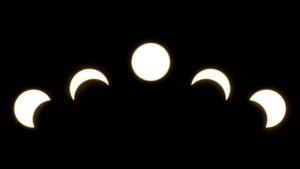
Have you ever felt inexplicably emotional during a full moon? Or noticed a surge of motivation when the sky goes dark at the new moon? You’re not imagining it.
For thousands of years, humans have looked to the moon as a guide for planting crops, tracking time, and understanding the rhythms of their inner world. And now, modern research is starting to catch up with what ancient cultures always knew: the moon’s 29.5-day cycle through its phases affects us more than we might think.
If you’re brand new to lunar astrology or you’ve been moon-watching for years, this guide has you covered. We’ll break down what each phase means, how it shapes your emotions, what your natal moon phase says about your personality, and how to actually work with each phase through simple rituals.
Let’s get into it.
What Are Moon Phases and Why Do They Matter?
Moon phases are simply the different appearances of the moon as seen from Earth during its monthly orbit. As the moon circles our planet, the sun lights up different portions of its surface. This creates the familiar progression from dark new moon to bright full moon and back again.
But in astrology, moon phases mean a lot more than just astronomy. The moon rules our emotional world: our moods, gut feelings, instincts, and the parts of ourselves we keep hidden. Your sun sign represents your outward identity, but your moon sign (and the moon’s current phase) speaks to everything happening beneath the surface.
Each of the eight moon phases carries its own energy:
Waxing phases (new moon to full moon): Energy builds. This is the time for action, growth, and calling things in.
Waning phases (full moon to new moon): Energy releases. This is the time for reflection, letting go, and rest.
When you understand this rhythm, you have a natural framework for timing decisions, setting intentions, and working with your emotional cycles instead of against them.
Also read: How to Find Your Moon Sign (And Why It Changes Everything About Understanding Yourself)
The 8 Moon Phases Explained
The lunar cycle contains eight phases, each lasting about 3.5 days. Here’s what each one means and how to make the most of its energy.
1. New Moon 🌑
What it looks like: The moon is invisible. It sits between Earth and the sun with its lit side facing away from us.
What it means: The new moon is all about fresh starts and planting seeds. It’s a blank slate, a moment of pure potential before anything has taken shape. Energy tends to run low, but possibility runs high.
How you might feel: Quiet, inward, reflective. You might crave alone time or feel pulled toward rest. If you’re tired during this phase, that’s completely normal. The darkness is asking you to slow down.
What to do:
- Set intentions for the coming month
- Start new projects or habits
- Journal about what you want to create
- Give yourself permission to dream without limits
What to avoid:
- Big public launches (the energy isn’t there yet)
- Locking yourself into commitments before you have clarity
- Pushing through when your body wants rest
Simple ritual: Light a candle somewhere quiet. Write down one to three intentions for the lunar month ahead. Be specific about what you want. Fold the paper and keep it somewhere meaningful. Come back to it at the full moon.
Journal prompt: What do I want to invite into my life this month? What seeds am I ready to plant?
2. Waxing Crescent 🌒
What it looks like: A thin sliver of light appears on the right side of the moon (if you’re in the Northern Hemisphere), growing a little more each night.
What it means: The waxing crescent is about emergence and showing up for what you started. Your new moon intentions are beginning to sprout, but they’re still fragile. This phase asks you to nurture your goals and stay committed even when you can’t see results yet.
How you might feel: Hopeful but a little anxious. There’s often tension between excitement and doubt during this phase. It’s the “will this actually work?” moment.
What to do:
- Take the first small steps toward your goals
- Gather what you need (information, resources, support)
- Build momentum through consistent daily action
- Remind yourself of your intentions
What to avoid:
- Quitting because nothing’s happening yet
- Taking on more than you can handle
- Measuring your beginning against someone else’s middle
Simple ritual: Every morning during this phase, say your intention out loud like it’s already real. “I am creating…” or “I am welcoming…”
Journal prompt: What’s one small action I can take today toward my intention? What doubts are coming up, and how can I work through them?
3. First Quarter Moon 🌓
What it looks like: Exactly half the moon is lit up (the right half if you’re in the Northern Hemisphere). The moon forms a 90-degree angle with the sun.
What it means: The first quarter brings a turning point. Challenges show up. Obstacles appear. The universe is basically asking: how serious are you about this? It’s decision time.
How you might feel: Tension, friction, restlessness. You might feel pushed to act or forced to choose. Plans might be falling apart or hitting walls.
What to do:
- Make the decisions you’ve been putting off
- Push through resistance instead of backing down
- Take bold, committed action
- Adapt your approach if something isn’t working
What to avoid:
- Throwing in the towel at the first obstacle
- Blaming everything and everyone else
- Reacting impulsively out of frustration
Simple ritual: Name the biggest thing standing between you and your goal. Write it down. Then write three possible ways around it, through it, or over it. Pick one and go.
Journal prompt: What challenge is pushing me to grow right now? What decision have I been putting off?
4. Waxing Gibbous 🌔
What it looks like: The moon is more than half lit, almost full. Just a small shadow remains on the left side.
What it means: The waxing gibbous moon phase is about refining and adjusting. You’ve pushed through the first quarter’s challenges. Now it’s time to fine-tune. Think of this as the editing phase, where you polish what you’ve built.
How you might feel: Driven, detail-oriented, maybe a little perfectionistic. You start noticing things you missed before. There’s a sense of “almost there.”
What to do:
- Review and tweak your plans
- Make adjustments based on what you’ve learned
- Prepare for the full moon’s peak
- Trust that you’re on track
What to avoid:
- Getting stuck in perfectionism
- Doubting decisions you already made
- Obsessing over tiny details
Simple ritual: Do a progress check. Look at your new moon intention. What’s working? What needs adjusting? Make one smart tweak.
Journal prompt: What have I learned since the new moon? How can I refine my approach for the final stretch?
5. Full Moon 🌕
What it looks like: The entire face of the moon is lit up. Bright, round, impossible to miss.
What it means: The full moon is the peak. Whatever you planted at the new moon comes to fruition now. Emotions run high. Things get revealed. This is the moment for celebration, illumination, and release.
Here’s an interesting thing: the full moon always happens in the zodiac sign opposite the current sun sign. That polarity can create internal tension, but also real clarity.
How you might feel: Intense. Extra emotional, extra energized, maybe a little chaotic. Sleep might be harder to come by. Relationships can feel charged. Everything gets turned up.
What to do:
- Celebrate your progress (seriously, acknowledge your wins)
- Let go of what’s not serving you anymore
- Practice gratitude
- Do release or manifestation rituals
- Charge crystals and make moon water if that’s your thing
What to avoid:
- Making big decisions while your emotions are running hot
- Bottling up feelings (let them move through you)
- Starting something brand new (this phase is about culmination, not initiation)
Simple ritual: Write down what you’re ready to release: limiting beliefs, draining patterns, situations that have run their course. Read the list out loud under the moon or near a window. Then burn the paper safely, letting it all go.
Journal prompt: What’s become clear to me this month? What am I ready to let go of? What am I grateful for?
6. Waning Gibbous (Disseminating Moon) 🌖
What it looks like: The moon starts to shrink, with shadow creeping in from the right side. Still more than half lit.
What it means: The waning gibbous is about integrating what happened and sharing what you’ve learned. You’ve hit the full moon peak. Now it’s time to absorb the lessons and pass along any wisdom. Some people call this the teacher’s moon.
How you might feel: Reflective, generous, talkative. You might feel pulled to share your experiences or help someone else figure things out.
What to do:
- Sit with your full moon insights
- Share what you’ve learned with others
- Express gratitude
- Start dialing back intense activity
What to avoid:
- Forcing your perspective on people
- Ignoring whatever the full moon showed you
- Staying in overdrive when you need to slow down
Simple ritual: Share something you learned this lunar cycle with someone who might need to hear it. A friend, a social post, a journal entry you’ll revisit later.
Journal prompt: What wisdom came through this month? How can I share it or weave it into my life?
7. Last Quarter (Third Quarter) Moon 🌗
What it looks like: Half the moon is lit (the left half in the Northern Hemisphere). Another 90-degree angle with the sun.
What it means: The last quarter is about release, forgiveness, and clearing out. It’s a second turning point in the cycle, but this time you’re turning inward. Old structures fall away so new ones can eventually take their place.
How you might feel: Thoughtful, possibly heavy. You might feel the weight of what needs releasing. There’s a “cleaning house” energy to this phase.
What to do:
- Forgive yourself and others
- Let go of grudges and old resentments
- Clear clutter (physical and emotional)
- Wrap up loose ends
What to avoid:
- Clinging to what’s clearly done
- Starting new things (wrong time)
- Dodging endings that need to happen
Simple ritual: Identify one thing you’ve been holding onto past its expiration date. A belief, a habit, a grudge, a possession. Let it go consciously, with thanks for whatever it taught you.
Journal prompt: What am I still carrying that doesn’t belong in my life anymore? What do I need to forgive?
8. Waning Crescent (Balsamic Moon) 🌘
What it looks like: A thin sliver of light on the left side, barely visible before the moon disappears entirely.
What it means: The waning crescent is the final phase. A time for surrender, deep rest, and preparing for rebirth. This is the void before the new moon, when the old cycle dies and the new one waits in the dark.
How you might feel: Tired, spacey, turned inward. You might want to withdraw from everything. Dreams often get vivid and strange. This is the most quiet, receptive phase of the whole cycle.
What to do:
- Rest. Actually rest.
- Meditate and tune into your intuition
- Review the whole lunar cycle that’s ending
- Let go of control and trust the timing
- Start thinking about intentions for the next new moon
What to avoid:
- Forcing productivity
- Launching anything new
- Ignoring what your body is telling you
Simple ritual: Take a bath with sea salt or epsom salt. Light a candle. Put on quiet music. Let the water wash away the cycle that’s ending.
Journal prompt: What is my intuition telling me in this quiet space? What am I ready to leave behind as a new cycle begins?
What Moon Phase Were You Born Under? Your Natal Moon Phase
Just like your sun sign and moon sign, the phase of the moon at your birth says something real about your personality, emotional patterns, and how you move through life.
Your natal moon phase comes from the angle between the sun and moon at the exact moment you were born. Each phase leaves an imprint that stays with you.
Born Under a New Moon
You’re a starter. Someone who thrives on fresh beginnings and new chapters. Life feels like one big experiment to you. You tend to act on instinct rather than detailed plans, and you bring a kind of childlike enthusiasm to everything you do.
Gifts: Enthusiasm, adaptability, willingness to begin again Challenges: Following through, impatience, sometimes missing red flags Life theme: Learning to trust your gut while building staying power
Born Under a Waxing Crescent Moon
You’re a builder who loves taking ideas from “maybe” to “real.” There’s a stubborn determination in you, even when people push back. You might feel a strong pull toward your roots while also wanting to break new ground.
Gifts: Persistence, curiosity, scrappiness Challenges: Self-doubt, rigidity, trouble letting go of the past Life theme: Breaking inherited patterns and making your own way
Born Under a First Quarter Moon
You’re built for turning points. Crisis activates you instead of paralyzing you. You have the guts to make hard calls and break from how things have always been done.
Gifts: Courage, decisiveness, natural leadership Challenges: Impulsiveness, inner conflict, frustration with slow progress Life theme: Learning when to push and when to pause
Born Under a Waxing Gibbous Moon
You’re a refiner with a real drive to improve everything you touch. Detail-oriented and devoted to growth, you often end up mentoring others or serving as the person who makes things better.
Gifts: Dedication, sharp analytical mind, high standards Challenges: Perfectionism, harsh self-criticism, not knowing when to stop tweaking Life theme: Accepting that “good enough” is sometimes exactly right
Born Under a Full Moon
You live with intensity and look for meaning in your relationships. The sun and moon were opposite each other when you were born, which can create tension between your public face and your private needs. People tend to remember you.
Gifts: Magnetism, emotional depth, ability to hold multiple perspectives Challenges: Inner conflict, big mood swings, relationships that run hot Life theme: Finding balance between your own needs and others’
Born Under a Waning Gibbous (Disseminating) Moon
You’re a natural communicator with a drive to share what you know. You feel purposeful when spreading ideas, whether that’s through teaching, writing, making art, or just talking to people who need to hear what you have to say.
Gifts: Communication skills, generosity, sense of mission Challenges: Coming on too strong, feeling unheard, crusader energy Life theme: Finding the right people who actually want what you’re offering
Born Under a Last Quarter Moon
You question tradition. You’re willing to tear down what isn’t working, even when it’s uncomfortable. There’s something revolutionary in you, a readiness to let go of the past when it’s time.
Gifts: Independence, ability to release, philosophical thinking Challenges: Feeling stuck between worlds, identity confusion, commitment issues Life theme: Learning to release without becoming bitter
Born Under a Waning Crescent (Balsamic) Moon
You’re an old soul. Deep intuition, maybe some psychic sensitivity. Born in the moon’s final phase, you carry wisdom that seems to come from somewhere beyond this lifetime. Spirituality and service often call to you.
Gifts: Strong intuition, compassion, spiritual depth Challenges: Feeling like an outsider, isolation, absorbing others’ pain Life theme: Finishing old cycles and getting ready for new ones
How Moon Phases Hit Different Based on Your Moon Sign
Everyone feels the lunar cycle, but your moon sign – and what element it is – shapes how you experience it. The moon spends about 2.5 days in each zodiac sign as it moves through its phases. When it hits your natal moon sign (or makes a strong aspect to it), you’ll feel everything more.
Fire Moons (Aries Moon, Leo Moon, Sagittarius Moon)
You feel lunar energy as sparks of inspiration and restless motivation. Full moons can make you extra bold or extra irritable. The waxing phases fuel your drive; the waning phases might feel frustrating until you learn to see rest as productive.
Phases that work well for you: First quarter (time to act) and full moon (time to shine)
Earth Moons (Taurus Moon, Virgo Moon, Capricorn Moon)
You feel lunar shifts physically: energy levels, hunger, your need for comfort and routine. You do well with lunar rhythm and consistency. Full moons can throw off your schedule, which tends to stress you out.
Phases that work well for you: Waxing gibbous (perfecting details) and new moon (grounded planning)
Air Moons (Gemini Moon, Libra Moon, Aquarius Moon)
You feel lunar energy in your mind: perception shifts, sudden ideas, social restlessness. Full moons can scatter your thinking; new moons help you get clear. You probably process emotions by talking them out.
Phases that work well for you: Waxing crescent (research mode) and waning gibbous (sharing ideas)
Water Moons (Cancer Moon, Scorpio Moon, Pisces Moon)
You’re the most moon-sensitive of everyone. You feel every phase of the lunar cycle in your body and your emotions, especially the full moon, which can bring real emotional waves. Trust the heightened intuition that comes with this sensitivity.
Phases that work well for you: New moon (intuitive downloads) and waning crescent (spiritual connection)
What Does Science Actually Say About Lunar Influence?
Is there any real basis for the moon affecting human emotions and behavior? The answer is more interesting than hardcore skeptics would have you believe.
What Researchers Have Found
Sleep disruption is documented. A 2013 study from the University of Basel found that around the full moon, participants had 30% less deep sleep brain activity, took five minutes longer to fall asleep, and slept 20 minutes less overall. Their melatonin levels dropped too.
A 2021 study published in Science Advances tracked sleep in indigenous communities in Argentina (some with electricity, some without) and also University of Washington students. Both groups slept less and went to bed later in the days before the full moon. This happened whether or not people had access to electric light.
We don’t fully understand why. Some researchers think it’s the moon’s gravitational pull. Others point to moonlight (even when we’re indoors). Some suggest humans might have a built-in circalunar rhythm, similar to the circadian rhythms that run our daily sleep-wake cycles.
Behavioral effects are murkier. Despite what people believe about “full moon madness,” big studies haven’t found solid links between lunar phases and hospital admissions, crime rates, or psychiatric crises. But here’s the thing: if the moon does affect sleep, and poor sleep affects mood and judgment, the connection might just be less direct than we assumed.
What This Means For You
Science is warming up to the idea that lunar cycles influence human biology, especially through sleep. Whether you see the moon’s effects as scientific, astrological, spiritual, or all three, the practical reality stays the same: plenty of people notice patterns in their energy, emotions, and sleep that line up with the lunar cycle.
The best experiment is tracking your own experience.
Simple Moon Phase Rituals Anyone Can Do
You don’t need a complicated ceremony to work with lunar energy. Here are straightforward rituals for the two most powerful phases.
New Moon Intention-Setting Ritual
What you need: A candle, paper, pen, and a quiet spot.
- Light your candle. Take three slow breaths to settle in.
- Think about what you want to create, attract, or become this month.
- Write one to three intentions in present tense, as if they’re already true. (“I am…” “I have…” “I welcome…”)
- Read your intentions out loud.
- Fold the paper and put it somewhere that matters to you: under your pillow, on a shelf, in a special box.
- Say thank you to whatever feels right (the universe, yourself, the moon).
- Check back in at the full moon.
Full Moon Release Ritual
What you need: Paper, pen, something fireproof, and a lighter or matches.
- Find a quiet space. Near a window with moonlight is nice but not required.
- Take some deep breaths and get grounded.
- Write down what you’re ready to release: fears, old stories, habits, situations, relationships that have run their course.
- Read each one out loud. Try saying: “I release you. Thank you for what you taught me.”
- Burn the paper safely, watching the energy transform.
- Close with gratitude for your growth and the space you’ve cleared.
Making Moon Water
Moon water is just water that’s been charged under moonlight. People use it for rituals, cleansing, or even watering plants.
- Fill a clear glass jar with filtered water.
- Put it outside or on a windowsill where it can catch moonlight. Full moon is strongest, but any phase works.
- If you want, set an intention for the water or place crystals nearby.
- Bring it in before sunrise.
- Use within a week or two for rituals, baths, or anointing objects.
2025 Moon Dates
Here are the key lunations to from this year:
New Moons:
- January 29: New Moon in Aquarius
- March 29: New Moon in Aries (eclipse season starts)
- June 25: New Moon in Cancer
- September 21: Solar Eclipse in Virgo
- December 19: New Moon in Sagittarius
Full Moons:
- February 12: Full Moon in Leo
- May 12: Full Moon in Scorpio
- September 7: Lunar Eclipse in Pisces
- November 5: Full Moon in Taurus
- December 4: Full Moon in Gemini
Eclipse seasons (March and September) tend to bring faster changes and fated-feeling events. Pay extra attention to your intentions and releases during those windows.
2026 Moon Dates to Mark
Here are the key lunations to watch in 2026:
New Moons:
January 18: New Moon in Capricorn
February 17: New Moon in Aquarius (Solar Eclipse)
March 18: New Moon in Pisces
April 17: New Moon in Aries
May 16: New Moon in Taurus
June 14: New Moon in Gemini
July 14: New Moon in Cancer
August 12: New Moon in Leo (Solar Eclipse)
September 10: New Moon in Virgo
October 10: New Moon in Libra
November 9: New Moon in Scorpio
December 9: New Moon in Sagittarius
Full Moons:
February 1: Full Moon in Leo
March 3: Full Moon in Virgo (Total Lunar Eclipse)
April 1: Full Moon in Libra
May 1: Full Moon in Scorpio
May 31: Full Moon in Sagittarius
June 29: Full Moon in Capricorn
July 29: Full Moon in Aquarius
August 28: Full Moon in Pisces (Partial Lunar Eclipse)
September 26: Full Moon in Aries
October 26: Full Moon in Taurus
November 24: Full Moon in Gemini
December 24: Full Moon in Cancer
Start Working With the Moon
The moon has been humanity’s original timekeeper for as long as we’ve been looking up at the sky. Working with its phases isn’t about believing in magic. It’s about syncing up with a rhythm that’s been running since before humans existed.
Start small:
- Track the moon for one full cycle (about 29 days). Note the phase each day and jot down how you feel.
- Set one intention at the new moon and follow it through to the full moon.
- Do one release ritual at the full moon and see what shifts.
Over time, you’ll build your own relationship with the moon. One that makes sense for your life, your beliefs, and your actual experience.
The moon doesn’t ask you to believe anything. It just invites you to pay attention.
And when you do, something clicks. You start feeling less tossed around by your emotions and more in sync with a cycle that gives structure to the chaos. The dark phases and the bright ones. The building and the releasing. The endings that clear the way for whatever comes next.